LET'S SAVE

OUR MALEO

TOGETHER

CSR

Controlled Breeding and Feeding Enrichment

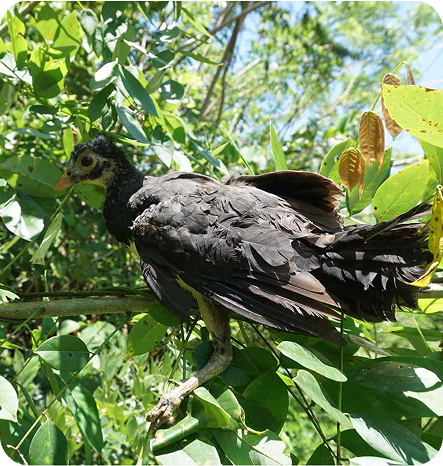
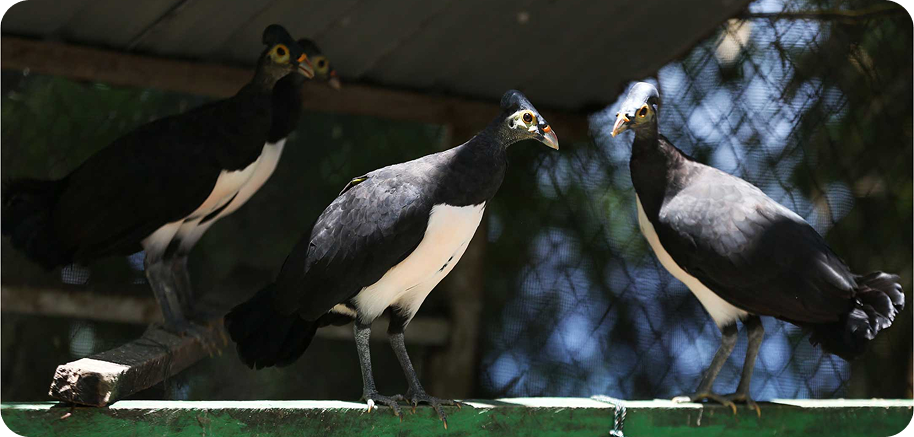
Sekelompok burung Maleo di habitatnya

What is Ex-Situ Conservation?

Ex-situ conservation is all about protecting plants and animals outside their natural homes. Think of it like a special safe house for species that are at risk. One of the main ways we do this is through breeding programs, where animals are cared for and bred in places like zoos or special facilities.

This whole effort is backed by some important laws here in Indonesia. We're talking about Law No. 5 of 1990 (which focuses on the conservation of biological resources and ecosystems), Law No. 32 of 2009 (about local government, as conservation often involves local efforts), and Government Regulations (PP) No. 7 of 1999 (specifically on the preservation of plant and animal species) and PP No. 8 of 1999 (about how we can responsibly use wild plant and animal species). Both government and private conservation organizations can run these breeding programs.

These programs aren't just about keeping species alive; they have multiple benefits! They help increase animal populations, offer opportunities for education and research, and even support ecotourism. Some of the animals bred in these programs can eventually be released back into the wild, while others, especially from the second generation onwards (F2), can be used for commercial purposes, helping to fund further conservation efforts
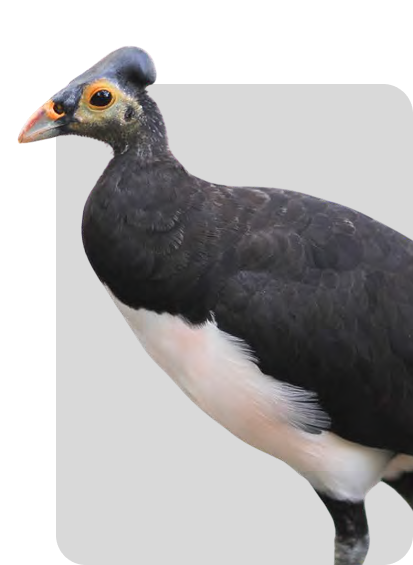
Burung maleo dari dekat

Meet The Maleo Bird

Let's talk about a very special bird: the Maleo. This unique bird is native only to Sulawesi Island in Indonesia. It's a member of the bird class (Aves), part of the Megapodiidae family, and belongs to the Macrocephalon genus.

The Maleo is easily recognized by its distinctive black, hard casque or crest on its head. It's so special that it's protected under PP No. 7 of 1999 – the same regulation we just mentioned for the preservation of species. Unfortunately, the Maleo's population is quite small, with only about 550 individuals recorded across Sulawesi (according to a 2015 decree from the Director-General of KSDAE). This places them on the International Union for Conservation of Nature and Natural Resources (IUCN) Red List as an endangered species.

Maleo birds are fascinating; they're monogamous and remain with their partners throughout the year. When it's time to lay eggs in their natural habitat, the pair always stays together.

After burying their eggs, the clever Maleos create three to four fake nests to trick predators (Wiriosoepartho, 1979). The male and female take turns digging, switching every 15-20 minutes. As they dig, both parents regularly use the casque on their heads to scoop up soil. It's thought that they do this to measure the soil temperature, ensuring the perfect conditions for their eggs (Dekker, 1990).

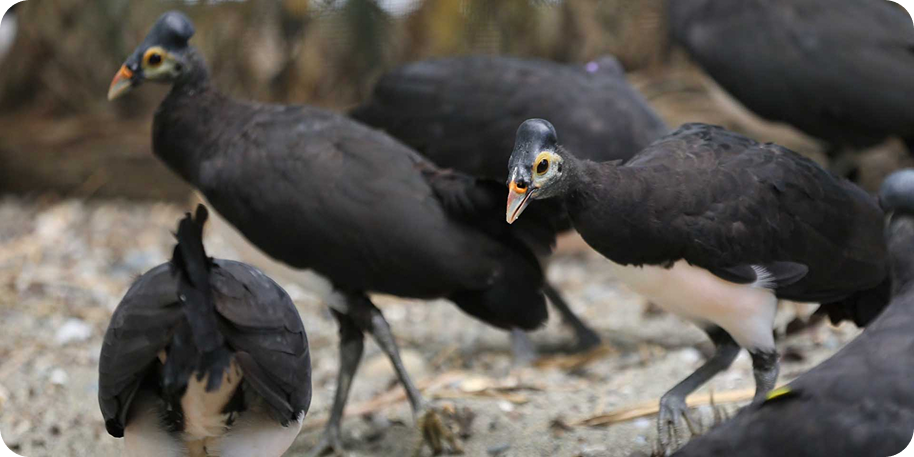
Burung Maleo di dalam kandang konservasi

The Ex-Situ
Conservation At the
Maleo Center

Since 2013, PT Donggi-Senoro LNG (DSLNG) has been actively involved in ex-situ conservation efforts for the Maleo bird. They're doing this awesome work in collaboration with the Natural Resources Conservation Agency (BKSDA) of Central Sulawesi Province. To ensure everything is done correctly, DSLNG also receives significant assistance from researchers at Tadulako University in Palu.

Awards & Publications

The Maleo ex-situ conservation program has been a resounding success, and it has been recognized by numerous organizations. Here are some of the accolades it's received:

United Nations Environment Programme (UNEP): They honored the program on World Environment Day back on June 5, 2013.
Ministry of Environment and Forestry (KLHK) of the Republic of Indonesia: DSLNG was recognized on September 15, 2021, for their significant involvement in Maleo bird conservation.
Head of the Banggai Regency Environmental Management Agency (BPLH): This award was given on August 17, 2013.
Banggai Community Appreciation: The program has also earned appreciation from the local Banggai community during various traditional ceremonies related to the Maleo.
Indonesian Sustainable Development Awards (ISDA): They received a SILVER award on November 28, 2014.
Beyond these awards, the Maleo ex-situ conservation program has also been featured in numerous local, regional, and national publications, spreading awareness about these important conservation efforts.
Induk Burung Maleo dari dekat

Releasing Maleo Birds Back Into The Wild

Once Maleo chicks from the ex-situ conservation program are old enough (around 1-2 months old), they're ready to be released back into their natural habitat. As of 2025, DSLNG has successfully released 127 Maleo chicks into the Bakiriang Wildlife Sanctuary.

Program Achievements

The Maleo ex-situ conservation program, run by a private company like DSLNG, is actually the first of its kind in Indonesia. This initiative perfectly aligns with DSLNG's mission to be a socially and environmentally responsible company. It's a huge help to the government in boosting the population of this protected, rare species. Plus, it serves as an important educational site for local communities, teaching them about sustainable environmental conservation.

Since this ex-situ conservation project kicked off in September 2018, 68 Maleo chicks have been successfully released into the wild. Following the recommendations from the Central Sulawesi BKSDA, these conserved Maleo birds were released into the Bakiriang Wildlife Sanctuary in Banggai. Besides Bakiriang, there are other original Maleo habitats in the Banggai area, including Taima Village (Bualemo District) and Tekuk Village (Balantak District).

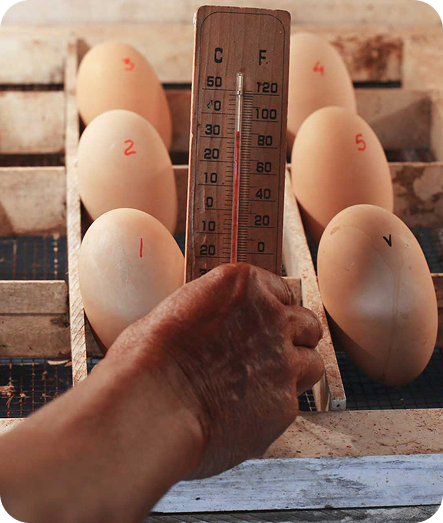
Telur Burung Maleo di Inkubator

The Hatching Process

Hatching Maleo bird eggs using an incubator is a real game-changer! It takes approximately 50 days, which is significantly faster than the natural hatching process, which can take 70-80 days.

Here's how we hatch Maleo eggs with an incubator: First, we measure and weigh each egg. Then, the eggs are carefully placed in the incubator, where we constantly monitor the temperature and humidity until they hatch. We maintain the incubator's temperature at around 32-35°C, simulating the conditions in their natural habitat. To manage humidity, we check and replace the water in a special container every 2-3 days. Once an egg starts to crack, we need to do daily water changes to prevent contamination from the allantoic fluid that comes out of the egg. From the moment a chick starts to crack its shell until it fully emerges, it usually takes about 5-6 hours.